Your remediation teams stopped believing the queue on purpose
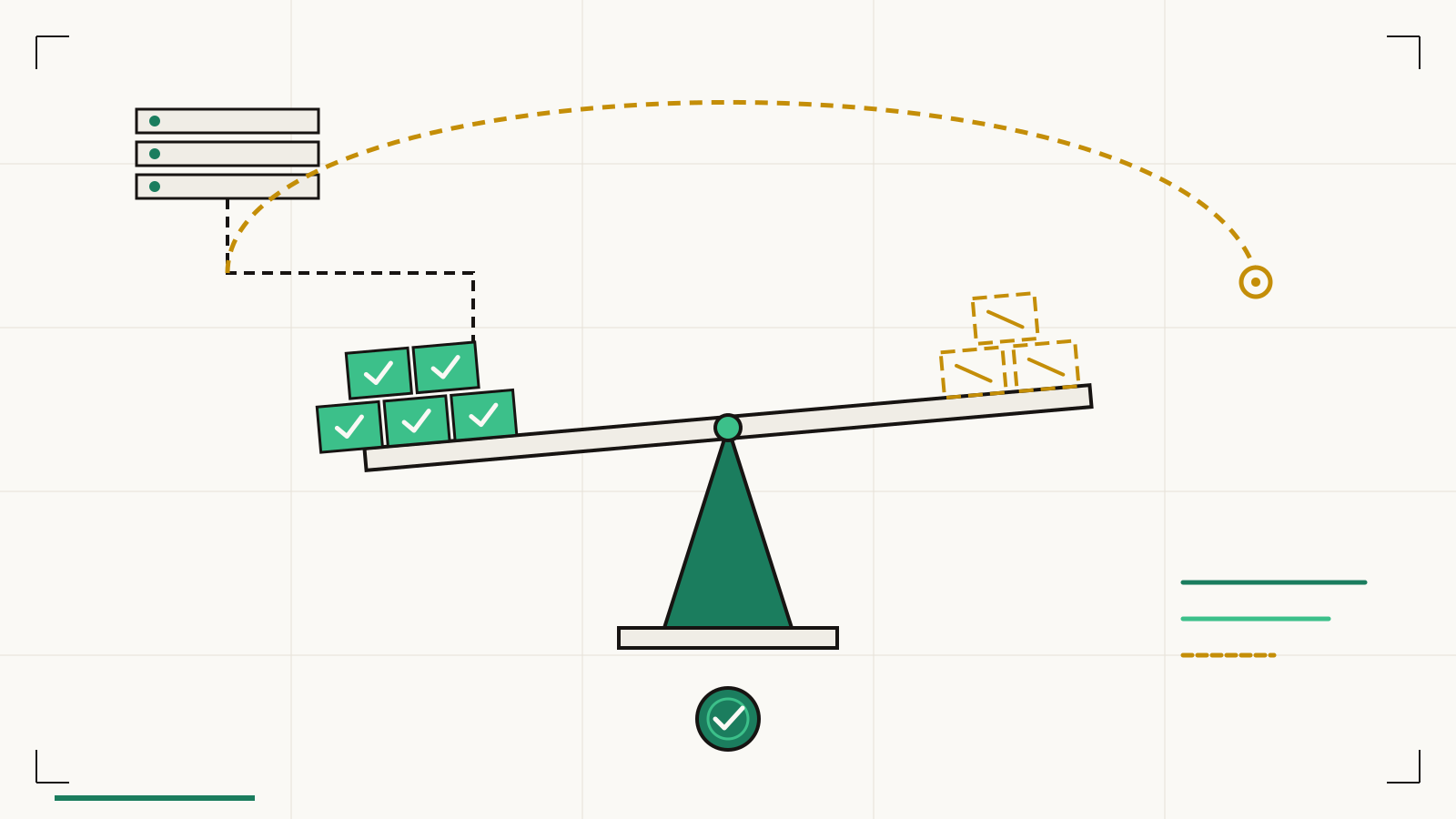
When an infrastructure lead exports the vulnerability queue to a private spreadsheet, sorts it by their own instinct, and fixes the forty rows they believe in, the program has already lost something it never measured. The team simply decided, based on years of evidence, that the queue was a rumor until proven otherwise, and every risk decision after that point happens in a hallway where security cannot see it and nobody logs it.
The usual explanation is that the team does not care about security. In our experience that explanation is almost always wrong, and it is wrong in a way that is expensive, because it sends leadership looking for an attitude problem when the cause is a set of design choices. Trust in a vulnerability program behaves like an output. Specific decisions about intake, routing, priority, and closure produce it or destroy it, each of those decisions can be measured, and a program can therefore be engineered to earn trust on purpose.
Three bodies of work this borrows from
None of the underlying psychology is new, and we want to credit it plainly. Amy Edmondson's research on team psychological safety established that people stop surfacing problems when surfacing them is risky. The Google SRE book's chapter on blameless postmortem culture turned that into operating practice, warning that a culture of blame leads organizations to hide incidents and raises their overall risk. The SOC's long fight with alert fatigue is the closest measured analogue we have: analysts who are fed enough false positives learn to discount the alert stream itself. What we add here is narrower and more mechanical, namely a ledger that names the specific deposits and withdrawals a vulnerability program makes, four indirect ways to read the balance, and a sequence for rebuilding an account that has gone negative.
The noise a remediation team absorbs on faith
The false positive tax on remediation teams is now quantified well enough to argue from. Picus reported that for one global industrial customer, CVSS alone flagged 63 percent of findings as critical, while its exposure validation found only 9 percent were truly high risk in that environment (Picus announcement; the scoring comparison is laid out in their CVSS, EPSS, KEV, SSVC, LEV, and PXS post). That is a single vendor case, so treat it as an illustration of scale. Reachability vendors describe the same gap from the code side, and AppSec Santa's comparison notes Endor Labs claims up to 97 percent noise reduction from function level reachability.
Every one of the findings between "critical by score" and "exploitable here" is a potential withdrawal if it reaches a remediation team marked urgent. The outcome data is where this stops being abstract. The 2026 Verizon DBIR found that only 26 percent of CISA KEV entries had been fully remediated across roughly 13,000 organizations, down from 38 percent a year earlier (Help Net Security's summary). Some of that gap is capacity. Some of it, and this is the uncomfortable claim, is remediation teams who stopped believing the queue years ago and now triage it privately before acting, so that even the findings that truly matter wait behind a credibility check.
A trust ledger, line by line
Write it as an actual ledger, because every entry is an event a security team can count.
| Deposits | Withdrawals |
|---|---|
| A ticket that was exactly right: correct asset, correct owner, a fix that worked | A ticket for an asset that was decommissioned months ago |
| A priority that held for a full cycle without being revised | A severity that flipped between Monday and Thursday with no new evidence |
| An approved exception honored without re-litigation at the next review | A finding closed by paperwork that reopened two scans later |
| A false positive that security caught and killed before sending | An emergency that turned out to be no emergency |
| Security meeting its own triage and response SLAs | Security holding IT to an SLA it does not meet itself |
The two columns do not weigh the same. In our experience one bogus emergency undoes a long run of accurate tickets, because the remediation team remembers the weekend it lost far longer than the routine fixes that went smoothly.
Six design choices that set the balance
Each line of the ledger traces back to a decision someone made about how the program runs. The ones we see move the balance most are these:
- False positive rate at intake. Whether anything filters scanner output before it becomes a ticket. This is where reachability and validation earn their keep in human terms: each finding they remove is one fewer withdrawal.
- Duplicate rate across scanners. Three tools reporting one missing patch as three tickets reads to the receiving team as a program that does not know what it is sending.
- Ticket context quality. Whether the ticket says which asset, why it matters here, and what a safe fix looks like in production. The field level contract lives in our remediation operating model, so we will not repeat it.
- Priority stability. Whether a priority survives a full work cycle unless new evidence (a KEV listing, a public exploit) changes it, and whether that evidence is stated when it does.
- Security honoring its own commitments. Triage within the window it promised, answers to questions within a day, and exceptions decided on time. The bilateral version of this is the remediation contract between security and IT.
- Closed means verified. A finding counts as fixed only after a rescan or a validation check confirms it, so that a closure on the dashboard is something a remediation lead can repeat to their own manager without a caveat.
Reading the balance without a survey
You cannot survey your way to an honest trust number, because the people who distrust the queue will tell you it is fine and keep their spreadsheet. The balance shows up in behavior instead, and all four of these signals come out of a ticketing system you already own.
Time to acknowledge, by team. Track how long a ticket waits before anyone touches it, split by receiving team rather than averaged across the company. A team whose acknowledgment time keeps drifting upward while its fix time stays flat is reading the queue and choosing to wait.
Self service fix rate. Count the share of tickets closed with no back and forth comment asking what the ticket means. A high rate says the ticket carried enough context to act on; a falling one says people are reverse engineering your intent.
Escalation tone. Read the last twenty escalations from a given team and note whether they ask for help or argue the finding is wrong. Sarcasm in a ticket comment is a lagging indicator of a long run of withdrawals.
Silent re-triage share. Compare the order in which a team actually fixes findings against the order the program assigned. If the two diverge sharply, the team is running its own prioritization in private, and that gap is the most direct measure of distrust we know.
When the account is overdrawn
A program that has lost trust cannot announce its way back. The rebuild starts by shipping less work with higher confidence. For the first month, send a team only the findings you would personally defend in their meeting: exploitable here, on an asset they own, with a fix that has been checked against production constraints. Kill duplicates before they leave security. Freeze priorities for the cycle unless new evidence arrives, and write that evidence on the ticket when it does. Verify every closure and report verified closures back to the team that did the work, which turns the dashboard into a record of their competence rather than their shortfall.
After a month, compare acknowledgment time and silent re-triage share against the baseline. If both are moving the right way, widen the flow a little and keep measuring; if not, the intake filter is still letting withdrawals through, and that is where to look next.
Where this model stops
The ledger cannot fix a capacity problem, and some of the DBIR remediation gap is plainly that: teams with more verified work than hours. It also measures trust between security and remediation teams, which is a different thing from the strain on the analysts inside security, and that within team cost deserves its own treatment in a later post. Finally, the indirect signals are noisy for small teams, where one person's vacation can move acknowledgment time more than any design choice, so read them over quarters rather than weeks.
Every design choice we have argued for across this series, from exposure based SLAs to evidence architecture, is a deposit in this same account. CVEasy AI, our local-first CTEM platform, uses TRIS and BASzy validation to keep the false positive line short before a ticket ever leaves security.