FortiBleed is confirmed as an INC and Lynx ransomware pipeline
On July 2, 2026, SOCRadar's Threat Research Unit found an exposed FortiBleed server and pulled the last piece into place. One operator working that infrastructure was signed in at the same time to victim negotiation panels for both INC Ransom and Lynx. The credential harvesting operation everyone had been calling initial access is now demonstrably the front door for twelve confirmed ransomware deployments and hundreds of encrypted endpoints. Read SOCRadar's writeup next to the Bleeping Computer and SecurityWeek follow ups and the story stops feeling like threat intel and starts reading like a business plan. If you patched CVE-2026-35616 in April and rotated FortiGate credentials after the June exposure story, you may already own the pieces. Nobody has been putting them in the same queue.
The firewall you paid for is the sniffer they used
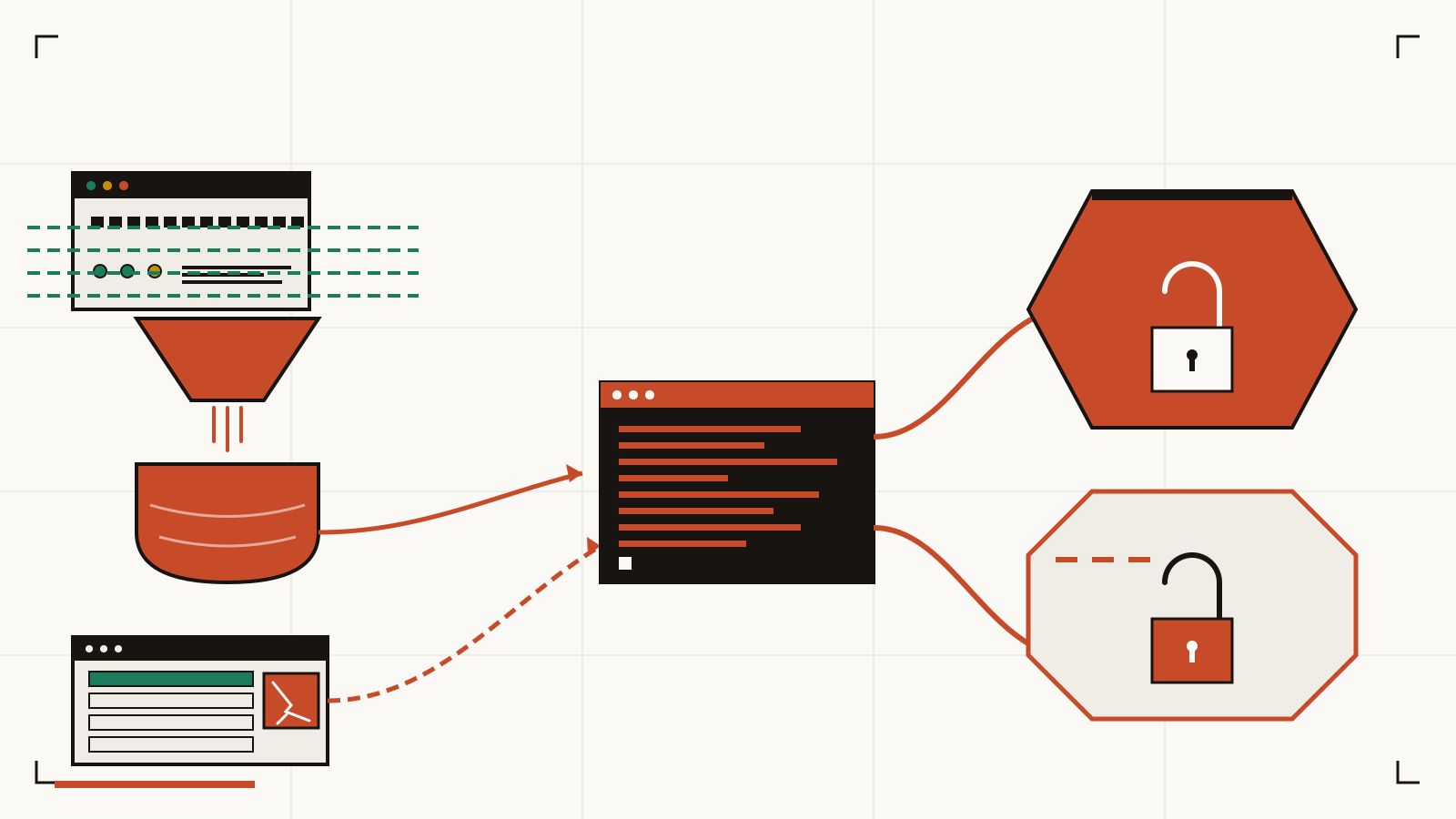
The tool that turned this campaign into an industrial pipeline is FortigateSniffer, a Golang program deployed on compromised FortiGate firewalls. What it does is elegant in the ugliest possible way: it abuses diagnose sniffer packet, the built-in FortiOS troubleshooting command every network engineer has typed at three in the morning to figure out why a tunnel refuses to come up. Attackers wrote a wrapper called SNIFTRAN that captures the SSH terminal output the command produces, converts it back to pcapng, and feeds it through their own PCAP Deep Analysis Toolkit (version 5.0 in the latest samples), which lifts cleartext credentials, NTLMv2 hashes, Kerberos TGS and ASREP tickets, and session cookies out of the flow. Cybersecurity News walks through the chain.
The capture list runs across 24 authentication protocols, including TACACS+, Kerberos, RPC, SMB, LDAP, SMTP, FTP, Telnet, RDP, WinRM, MS-SQL, MySQL, PostgreSQL, and RADIUS. It runs only between 07:00 and 18:00 Moscow Time, so the workload blends into ordinary appliance CPU and memory during business hours. SOCRadar's deep dive counted 659 harvesting pipelines live, over 110 million credentials collected across the operation, and 86,644 FortiGate firewalls confirmed compromised. Cyrillic comments in the tooling source point at a Russian speaking Initial Access Broker running the show with a crew of about twenty organized into functional roles.
No exploit is executing on the wire. The attackers are running a legitimate FortiOS diagnostic to read authentication traffic that already had to pass through the firewall to reach a domain controller or a RADIUS server. Turning off the SSL VPN does not undo the months of watching the same box has already done to your Kerberos and RADIUS flows, and rotating only the VPN credentials leaves every service account that authenticated across LDAP or SMB through that appliance still exposed.
One operator working both negotiation rooms
The July 2 confirmation shifts this from "large credential trove" to "known ransomware pipeline." SOCRadar tracked scanning from FortiBleed infrastructure against roughly 11,250 FortiGate portals in 150+ countries. On 409 of those, the actor established admin level access. On 354, they walked the full chain: VPN compromise into a domain controller and out to domain admin. Twelve of those environments have already had ransomware deployed against them, and the same operator whose credentials populated those attacks is currently signed in to victim panels for both INC Ransom and Lynx.
That last detail is what makes the link evidentiary. Ransomware groups run negotiation infrastructure as separate victim portals per operation, so an active session on one implies operator or affiliate access. Sessions on two, from the same infrastructure that runs FortigateSniffer, mean one crew feeding two RaaS programs from a single credential engine. Dark Reading and RH-ISAC read the same telemetry the same way.
The management console pushed the infostealer
While FortigateSniffer was running on FortiGate boxes, the same actor cluster was using the FortiClient EMS management server as a second attack surface. That is CVE-2026-35616, a CVSS 9.1 authentication bypass in FortiClient EMS 7.4.5 and 7.4.6, added to CISA KEV on April 6, 2026. The mechanism is a classic reverse proxy trust boundary failure and the effect is that your management plane becomes the payload plane.
FortiClient EMS runs a Django application behind Apache. Apache is meant to terminate mTLS from managed clients, validate the client certificate, and pass the outcome to Django by setting the WSGI environment variables SSL_CLIENT_VERIFY, SSL_CLIENT_S_DN, and SSL_CLIENT_CERT. Django middleware reads those values to decide whether the request came from an authenticated FortiGate. The bug is that the same middleware also reads the HTTP header form of those names (X-SSL-CLIENT-VERIFY, X-SSL-CLIENT-S-DN, X-SSL-CLIENT-SERIAL) as a fallback, and the shipped Apache config lacks RequestHeader unset directives to strip them from client input. Any caller can send X-SSL-CLIENT-VERIFY: SUCCESS, X-SSL-CLIENT-S-DN: CN=admin, and X-SSL-CLIENT-SERIAL: 0000000000000001 and Django accepts an authenticated admin session. Certificate validation is only a Distinguished Name string comparison, so no signature is ever checked. Bishop Fox walked the flow end to end, and a public detection scanner targets /api/v1/fabric_device_auth/fortigate/init to confirm exposure.
Once inside, the attacker holds admin API access on the console that manages every endpoint the EMS knows about. In the cluster Arctic Wolf reported in May, the payload was EKZ Infostealer disguised as a legitimate Fortinet endpoint patch, pushed through the EMS software distribution channel to selected managed workstations. EKZ pulls credentials out of Chrome and Firefox and specifically defeats Chrome's App Bound Encryption for stored passwords. Fortinet's out of band hotfix added the RequestHeader unset directives that keep the spoofed headers out of Django; the permanent fix ships in FortiClient EMS 7.4.7. FortiClient EMS 7.2.x is not affected.
Why a CVSS first queue looks at this and sees three separate items
The FortiBleed harvesting story got a CISA advisory in June. CVE-2026-35616 went on KEV in April. FortigateSniffer is not a CVE at all, because it is post exploitation tooling built on a documented FortiOS diagnostic. A base severity queue treats those as three tickets: one advisory to file, one CVE to patch, one campaign writeup to skim on a Friday. There is no CVE identifier for "your firewall has been passively reading your Kerberos tickets since February," so a defender who works only from the CVE queue never considers the two events together, which is precisely how the campaign keeps converting patched shops into ransomware victims.
TRIS on a linked exposure
TRIS, the Threat and Risk Intelligence Scoring engine inside CVEasy AI, is built for exactly this kind of finding. It reads the campaign as one exposure and walks a few layers to decide the score for each affected asset.
Confirmed active exploitation. The July 2 SOCRadar work is a confirmed operator link, not a proof of concept. Twelve ransomware deployments out of 354 completed chains, INC and Lynx named, the operator observed on both panels. That is top ACT on every affected asset, not the "proven PoC" band CVE-2026-35616 previously earned on its own.
Real exposure. The same CVE scores differently by real conditions. An EMS 7.4.6 reachable from the internet with the hotfix not yet applied is top ACT; an EMS 7.4.6 behind a management VLAN with no untrusted clients allowed through sits materially lower on the same firmware. A FortiGate with SSL VPN on a public interface and passing RADIUS to internal AD is top band for the sniffer angle; a sandboxed FortiGate on a lab segment with no domain traffic is far lower. Same CVE, same firmware, entirely different scores.
Chained control planes. When TRIS sees admin adjacent exposure on both FortiGate and FortiClient EMS in the same tenant, it raises the score for each, because the campaign uses both. A single CVE view treats them as independent findings; TRIS treats them as a compound finding.
Threat intel correlation. The Cyrillic tooling comments, the 07:00 to 18:00 Moscow window, the operator sessions on INC and Lynx panels, and the 659 pipeline count all correlate as one campaign, so an alert on CVE-2026-35616 exploitation cites the same actor as an alert on anomalous diagnose sniffer packet execution.
The result is not a fresh CVSS number. It is a queue ordered by the questions that decide the next 48 hours: which FortiGates have been reachable to the internet since February and what credentials passed through them, which FortiClient EMS installs are still on 7.4.5 or 7.4.6, and which endpoints received a "Fortinet patch" from the EMS software distribution channel between April and June.
What to do this week
Upgrade FortiClient EMS to 7.4.7 today if you have not, or apply Fortinet's out of band hotfix that adds RequestHeader unset directives for X-SSL-CLIENT-VERIFY, X-SSL-CLIENT-S-DN, X-SSL-CLIENT-SERIAL, and X-SSL-CLIENT-CERT. If you are on 7.2.x you are not exposed to this CVE, but check the EMS logs anyway for admin sessions that arrived without a corresponding mTLS handshake. Bishop Fox published a check script that returns a distinctive HTTP 500 when the auth bypass reaches Django, which is a fast way to survey a fleet.
On the FortiGate side, treat every credential that could have crossed a compromised firewall since February 2026 as harvested. That covers VPN accounts, admin accounts, and every service account that authenticated across RADIUS, TACACS+, RDP, SMB, or LDAP through a public interface FortiGate. Rotate, enforce MFA on the management interface and the VPN portal, and verify that syslog is landing somewhere the attackers cannot reach if they still hold the box.
Hunt for FortigateSniffer. Unusual diagnose sniffer packet execution over SSH is the primary signal, especially between 04:00 and 15:00 UTC when the crew's Moscow window is active, and outbound flows from the firewall to unfamiliar collection endpoints during that same window are the exfiltration channel. On the endpoint side, look for a "Fortinet endpoint patch" pushed through EMS between April and June that did not come from your normal patch process, plus abnormal browser process access to Chrome or Firefox credential stores immediately after the push.
How CVEasy AI surfaces this
CVEasy AI is the number one local-first CTEM platform, and campaigns like FortiBleed are the exact case the architecture is built for. The platform ingests the real sources (SOCRadar STRU, Fortinet PSIRT, CISA KEV, Bishop Fox and Arctic Wolf research) and runs them through TRIS against the inventory sitting on your own hardware, answering the concrete questions that decide your week: which FortiGates saw domain joined RADIUS or Kerberos traffic since February, which FortiClient EMS installs are still on 7.4.5 or 7.4.6, and which endpoints in the fleet received an EMS software distribution push during the exposed window. Your inventory, your firewall logs, and your credentials never leave your hardware, which matters more than usual on a campaign whose initial access was made possible by trusting a control plane to keep private the traffic passing through it.
Sources: SOCRadar STRU link analysis, SOCRadar FortiBleed deep dive, Bleeping Computer, SecurityWeek, Dark Reading, Cybersecurity News on FortigateSniffer, Bishop Fox CVE-2026-35616 analysis, Arctic Wolf EKZ Infostealer report, keraattin PoC, Bishop Fox check tool, NVD CVE-2026-35616